
Finding Haverstraw Resident Records
Begin with the kind of fact already known. An address fits the Town of Haverstraw PROS property search, which can return a parcel, current or prior owner, and tax mailing address. A person with a known address may be checked through the New York voter tool only with the required first-party details. A past household belongs in the library and Rockland Room collections. The County Clerk's deed index connects a property interest to a date, while court and probate indexes may explain a transfer or estate. None of those sources is a complete list of everyone who lives in Haverstraw.
Keep the evidence separate. An assessor entry supports ownership and tax-mailing facts. A deed shows a recorded transaction. A directory is a dated publication. A voter match is an identity and poll-site result, not proof that a person is at an address every day. Haverstraw includes the Village of Haverstraw, West Haverstraw, Garnerville, Thiells, and part of Pomona, so a record's municipal label should be captured before requesting anything from a local office.
- Use a street address, owner name, or SBL in the Town property roll. Record the property location and mailing address as different fields.
- Use the parcel number and legal description to compare the result with a recorded deed in the Rockland County Clerk system.
- For a known registered voter, use the state lookup as a verification tool rather than a way to browse a neighborhood.
- For an older household, compare Rockland cross-reference volumes, telephone books, directories, census images, newspapers, and probate material by year.
- When a record has no web index, send a focused FOIL request to the department that keeps the existing document.
Haverstraw Resident Records Offices
Haverstraw searches usually cross office lines. The Town Assessor maintains the property roll for Town parcels, while the Village of Haverstraw maintains separate roll PDFs and an assessor contact route for Village parcels. Rockland County Clerk records land instruments and many Supreme and County Court files. The Rockland Board of Elections maintains registration records, and the state tool is limited to a registered voter's own verification details. For a street-wide research method, use the Haverstraw street directory rather than treating any one office as a full household list.
Rockland County Clerk
1 South Main Street, Suite 100
New City, NY 10956
845-638-5070
Town of Haverstraw Assessor
1 Rosman Road
Garnerville, NY 10923
845-942-3720
Rockland Board of Elections
11 New Hempstead Road
New City, NY 10956
845-638-5172
Haverstraw PROS Property Trail
The Town PROS search is the practical first stop for a Town parcel. It accepts a street address, Tax Map number or SBL, owner name, and Street Finder selection. The address instruction is unusually specific: enter the number and road name without a suffix. A search for “5 Pine” can return more than one contains-text result, while the road selector can return all addresses on a selected public road. The owner field can match current or prior owners, and an equals sign before a last name requests an exact last-name match.
| PROS field | Use in a Haverstraw search | Important limit |
|---|---|---|
| Street Address | Find a parcel by number and road name | Contains-text results can include similar addresses |
| Tax Map / SBL | Carry a stable parcel identifier to GIS and deeds | Confirm Clerk references with the assessor |
| Owner Name | Locate current or prior owner matches | Owner is not automatically the occupant |
| Street Finder | Return the Town's public-road addresses | Village parcels may use a separate assessor route |
The Town PROS form shows these search controls. The assessment roll can add class, assessment, exemption, school district, parcel size, account number, and tax description. Its mailing address is where tax notices go. It may be a post office box, business, attorney, or address outside Haverstraw, so it must not be presented as proof that an owner lives at the parcel.
The property-search screen is reproduced here with its address, owner, SBL, and Street Finder paths.
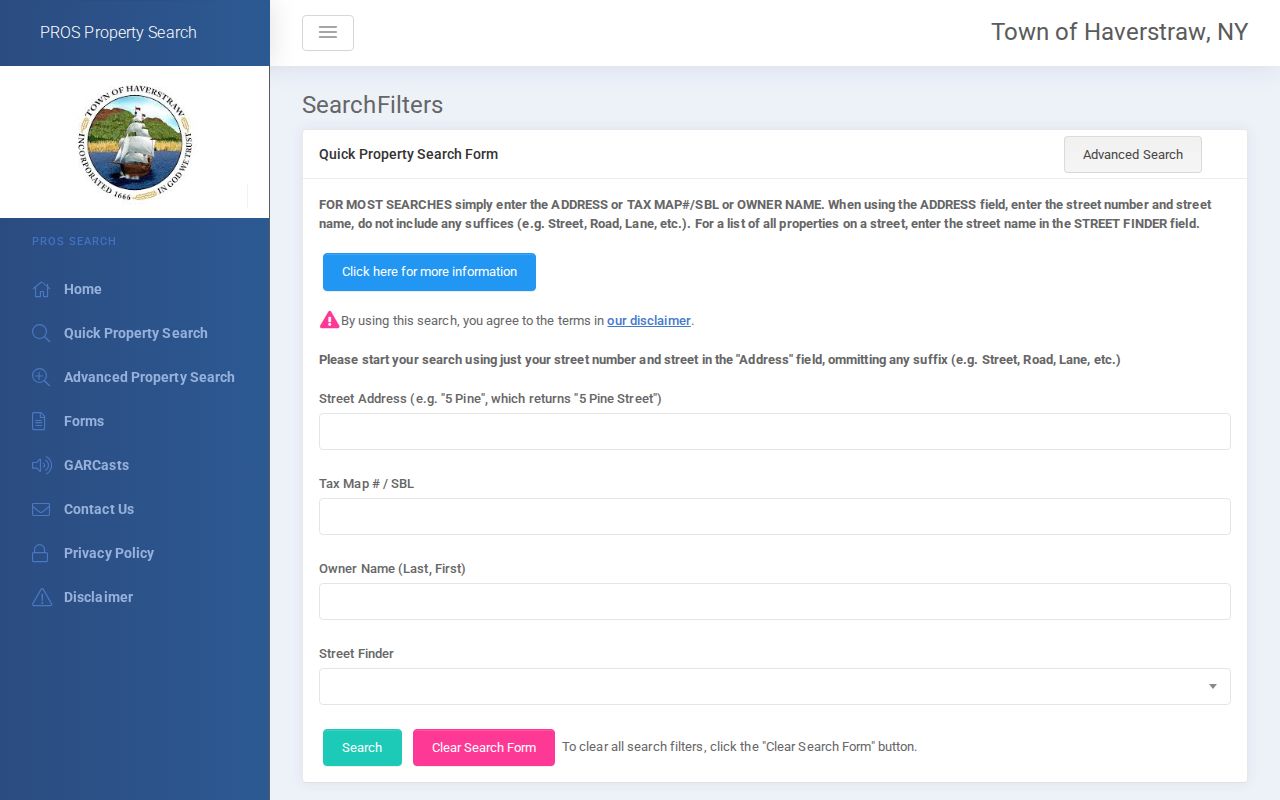
Those fields make the roll useful for starting a resident trail, but the result should be dated and verified against the appropriate municipal jurisdiction.
Haverstraw Parcel and District Checks
Rockland GIS supplies the map layer that property rolls do not. Its address and Tax ID searches can place a parcel beside roads, municipal boundaries, political and election districts, historic resources, land use, and environmental or topographic layers. A Haverstraw postal label alone is not enough because a parcel may be in the Village of Haverstraw, West Haverstraw, Garnerville, Thiells, or the Town's portion of Pomona. GIS helps identify the correct keeper before a local request is made.
The county says its GIS program maintains more than 90,000 parcels and developed datasets since 1994. That scale makes the map a strong discovery tool, not a survey, title opinion, or verified owner source. Select a parcel, copy its Tax ID or SBL, then confirm the owner and legal description in the assessor material and Clerk index. This is particularly useful when an address has been abbreviated differently in a deed, directory, or tax roll.
Rockland GIS displays the portal's parcel and layer choices.
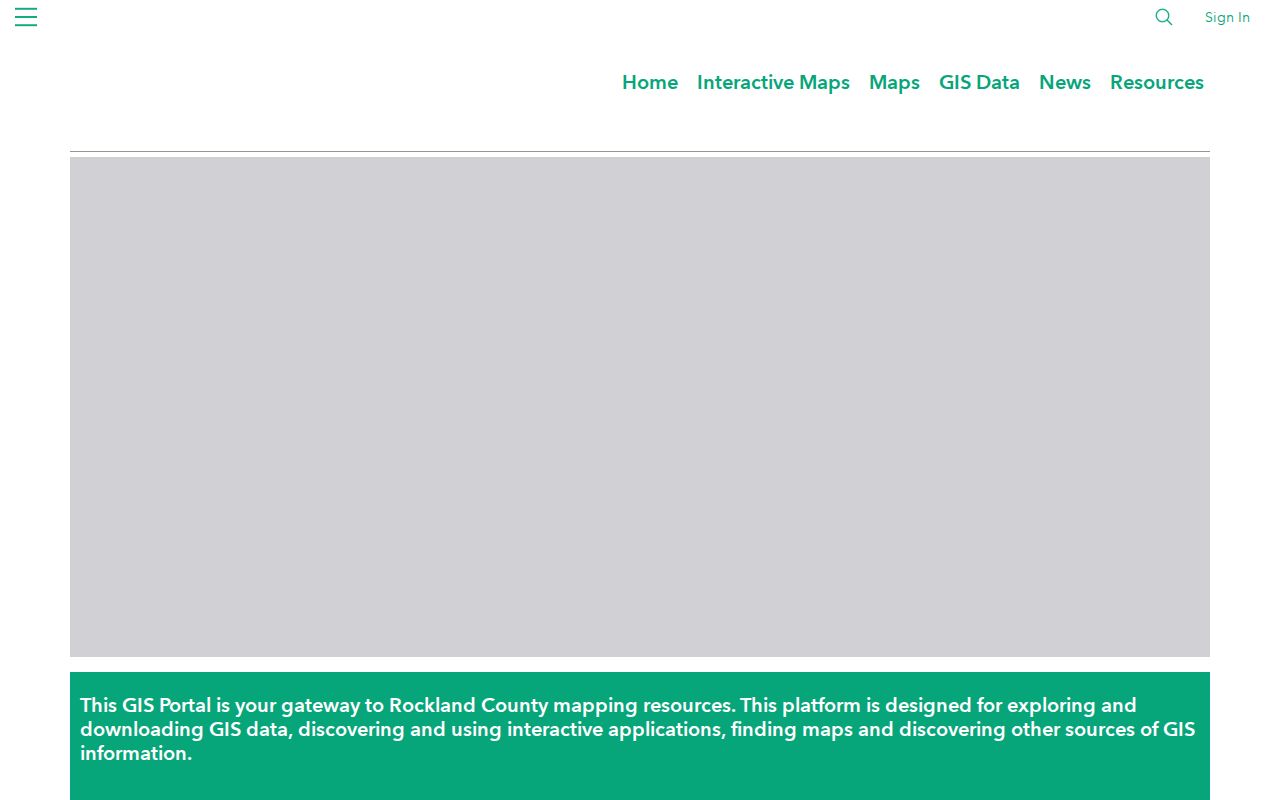
The portal's boundary layers are a practical safeguard against combining town, village, and postal geographies as if they were the same record system.
Haverstraw Voter Record Limits
New York's voter lookup is built for a registered voter to check registration, poll-site, and mail-ballot information. It requires county, last name, first name, date of birth, and address information, with ZIP available as an alternate narrowing field. A failed lookup is not a finding that a person is unregistered or has moved. Protected voters, incorrect inputs, and routine list maintenance can all change the result.
Election Law §5-602 makes registered voter names and residence addresses available in election-district lists, but Election Law §3-103(5) restricts voter-registration information to elections purposes. The public state tool does not publish a browseable Haverstraw roster. A full-file request must describe the records and state the elections purpose; protected voters and Address Confidentiality Program participants have special safeguards. Never collect date-of-birth inputs or publish a block-level list from individual verification searches.
The New York voter lookup illustrates the identity fields a registered voter supplies.
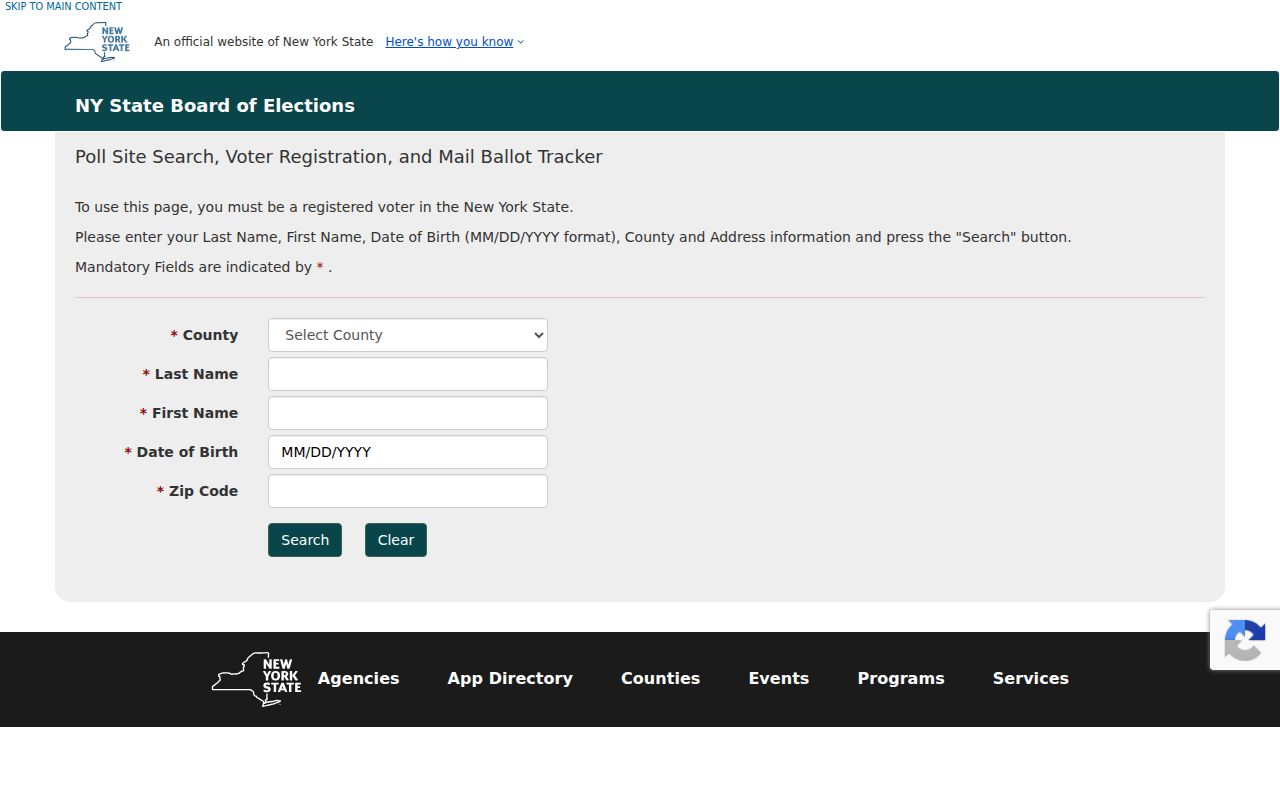
The required fields show why the tool is best used to verify a known voter, not to manufacture a general resident directory.
Current Haverstraw Resident Sources
There is no single current roll of Haverstraw households. The useful sources are purpose-built records with different dates and fields. An assessment entry can name an owner and tax-mailing address. A recorded instrument can identify parties to a property transaction. A voter result concerns a registered voter's own status, while a license or entity record can show a public business affiliation. Read the source label before describing the connection it proves.
| Source | Who It Lists | Keeper | Access |
|---|---|---|---|
| Town PROS and assessment rolls | Current or prior owners and tax-mailing clues | Town Assessor | Free portal and annual PDFs |
| Village assessment-roll PDFs | Village parcel owner and assessment fields | Village Assessor | PDF rolls, contact route |
| New York voter tool | Known voter verification and poll-site status | State and Rockland elections offices | Required identity inputs; legal limits |
| County Clerk land index | Grantors, grantees, and recorded instruments | Rockland County Clerk | Guest view; prints require account |
| State business and license tools | Public entity or practice affiliation | New York agencies | Database-specific public fields |
Use two independent sources when a name matters. For example, a PROS owner match can be paired with a deed's legal description and recording date. An estate lead belongs in Surrogate's Court, not a property-roll inference. A Haverstraw resident search becomes more reliable when it preserves what the record actually says, its date, and the office that supplied it.
Haverstraw Deed Index Confirmations
The Rockland County Clerk's land-record system is the bridge between a property roll and an earlier owner or seller. Its land records include deeds, mortgages, satisfactions, and assignments. Cott permits guest viewing of many digitized documents without an account. Printing an image requires registration and is charged per page. Before relying on a date range, open the portal's Certified Dates utility because the research did not establish one fixed online cutoff for every document type.
A deed-index result may provide party names, grantor or grantee role, instrument type, recording date, document or index number, book and page where available, a legal-description or SBL reference, and an image link. The Clerk specifically warns that section, block, and lot references in its database are not verified. Match them back to the local assessor, especially where a subdivision or address change complicates the trail.
Cott eSearch shows the guest route and its Certified Dates notice.
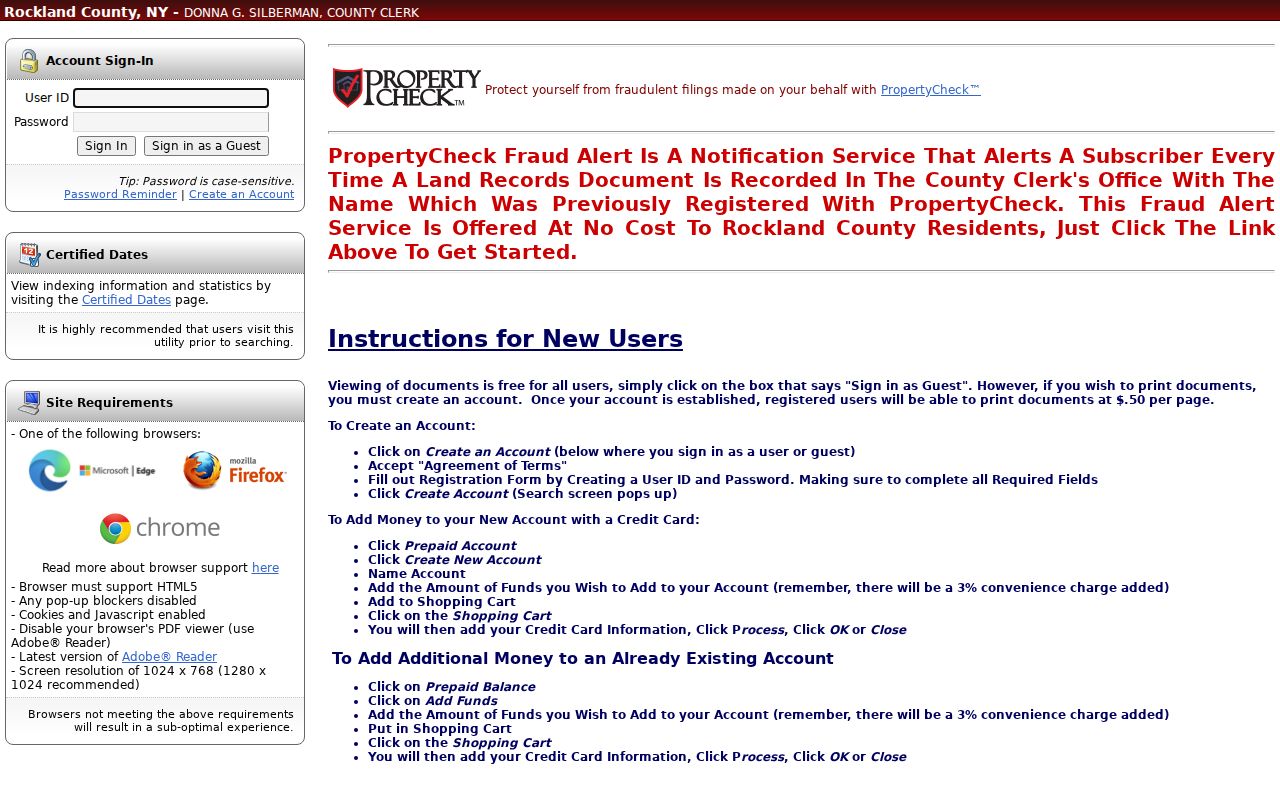
Free viewing and paid printing are separate access paths, so a reader can inspect an index entry before deciding whether a copy is needed.
- Parcel
- A defined piece of land identified by an assessor number such as an SBL.
- Index
- A finding tool that points to a record. It is not always the record image itself.
- Grantor and grantee
- The party transferring an interest and the party receiving it in a recorded instrument.
- Criss-cross directory
- An address-to-name directory, useful for a dated household clue rather than current proof.
Haverstraw Court and Vital Boundaries
Courts and vital-record offices answer focused questions, but both have important limits. Haverstraw Town and Village Justice Courts keep their own local files. Rockland County Clerk handles Supreme and County Court material, while NYSCEF, WebCriminal, and WebSurrogate have different search modes and coverage. Mental-hygiene, matrimonial, youthful-offender, juvenile, sealed, expunged, adoption, and protected-family material is not ordinary public search material. A name hit in a docket should be compared with a court, date, case number, and lawful supporting context.
For genealogy, the Department of Health route is restricted by record type and time period. Birth records generally open after 75 years when the person is known deceased. Death records open after 50 years, and marriage records after 50 years when both spouses are known deceased. The state genealogy form requests identifying event details and charges a base fee for a one-to-three-year search range. Recent certified copies have different relationship, court-order, or statutory rules.
New York's genealogy records page explains the historical access route.
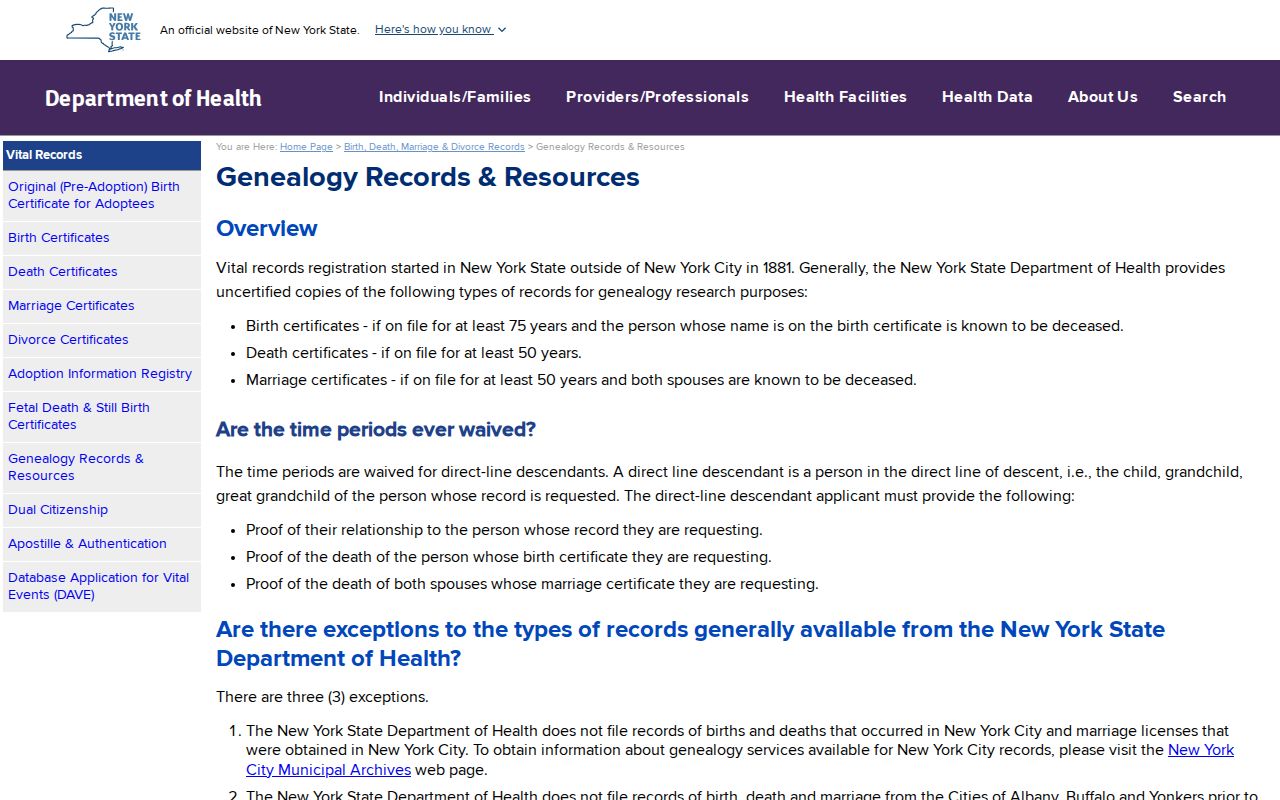
The access periods make an index useful for family-history work without implying that a recent certificate is available to any requester.
Historical Haverstraw Resident Directories
Historic Haverstraw research has a usable but uneven directory shelf. Rockland Room's digitized collection includes railroad and regional titles for 1889-90, the Haverstraw and West Shore line for 1890-91, 1904, and 1917-18. The Haverstraw Library Local History Room adds yearbooks, newspapers, census images, photographs, and genealogy material. New City Library holdings include Haverstraw telephone books for 1884-90, Rockland County telephone books for 1910-98, and Rockland cross-reference directories for 1978-99.
These records are dated snapshots. A cross-reference volume can connect an address to a printed occupant or subscriber, then the name section, census, newspaper, deed, and probate records can confirm or question that lead. For the full collection-by-collection treatment, use the Haverstraw city directories resource. Search both Warren and Haverstraw for nineteenth-century material because the Village of Warren was renamed Haverstraw in 1874.
Haverstraw Archives and FOIL Routes
When an online index ends, ask the right custodian for an existing record. Rockland County says there is no county-wide Records Access Officer, so a FOIL request should name the department, records sought, date range, and names or parcel number. New York's FOIL process generally requires an agency to grant, deny, or acknowledge a request within five business days. It provides records that exist; it does not require an office to create a list of people connected to an address.
Older Rockland hard-copy court files may be at County Archives in Pomona, while newer files are held through the County Clerk route. The County Archives identifies original deeds from 1798-1907 and mortgages from 1798-1931. Library staff, the Historical Society, and the Genealogical Society of Rockland County can help identify an appropriate collection, but no source establishes a universal surname or house index. A concise request with a street, historic village name, SBL, surname variant, and date range is more useful than a request to find everyone with a name.
Haverstraw Property Fraud Alerts
Property records can also be used to check an unexpected deed or filing. Rockland County Clerk's Cott system includes a PropertyCheck alert route, and the Clerk's recent goals included public outreach about property fraud. An unsolicited letter that demands a large charge for a deed copy should be compared with the Clerk's official online-viewing and copy routes before payment. A document should be checked by its recording details, not by a salesperson's summary.
Alerts are a prompt to inspect a filing, not a judgment about its validity. Start with the party names, recording date, instrument number, legal description, and parcel reference. Then contact the County Clerk if a filing seems unfamiliar. The same careful approach applies to a message about unclaimed money, jury duty, or a supposed court warrant: use a typed official address or known office number rather than a link or number supplied by the caller.
Haverstraw's 1906 Records Story
Records around the January 8, 1906 clay-excavation landslide can explain an unusual break in an old Rockland Street trail. Town history reports that the disaster destroyed the Rockland Street business section and killed 19 people. A pre-disaster deed or directory finding should be compared with 1906-1915 newspaper notices, obituaries, property transfers, court records, and later building or permit material. A missing listing can reflect destruction, rebuilding, or relocation, not a conclusion about a resident's life.
The same local history makes the Haverstraw search path more precise. Brick-industry, river, railroad, and Garnerville factory records can put a household under a station, village, employer, or historic label rather than a modern ZIP. Preserve the term printed in each source. The 1906 story is a reason to widen the time range and check the archive handoff, not a reason to fill a gap with assumptions.
Note: County Clerk digitization and deed-to-GIS work continues, so an unavailable online image should be checked through Certified Dates, the Clerk, or Archives.