
Haverstraw Previous Residents Sources
One address can move through several eras of record keeping. Begin with the current parcel to establish its SBL and legal description, then choose the historical source that matches the time period. County Archives hold the firm early deed and mortgage collections. Cott provides a digital land index and images for many records, but its exact online range must be checked through Certified Dates. Directories and census images provide a household layer that deeds do not.
| Source | Years it covers | Where held | What it can show |
|---|---|---|---|
| Original Rockland deeds | 1798-1907 | County Archives, Building S, Pomona | Grantor, grantee, legal description, and title transfer |
| Original Rockland mortgages | 1798-1931 | County Archives | Mortgage parties, amount, assignment, and satisfaction |
| Cott land index and images | Many records digitized; some date to 1798 | Online Cott and Clerk terminal | Deed, mortgage, satisfaction, index fields, and available images |
| Haverstraw and Rockland telephone volumes | 1884-90; 1910-98 countywide | New City Library Rockland Room | Dated name, telephone, and address trail |
| Rockland cross-reference directories | 1978-99 | New City Library Rockland Room | Reverse address-to-occupant or subscriber lead |
| Local census images | 1850, 1855, 1865, 1870, 1892, 1900, 1905 | Haverstraw Library | Names and household detail depending on the schedule |
| Haverstraw Sanborn set | 1910, 17 sheets | Library of Congress | Building footprint, material, use, and street context |
The current Town assessment rolls also provide a starting owner, mailing address, property location, class, value, exemption, and SBL. Use those fields to begin a backward trail, not to substitute for a historical household record.
Freeze the Haverstraw Parcel First
Past-resident research begins with an address check in Town PROS. Record the displayed street spelling, current owner, any prior-owner result, mailing address, SBL, and legal description. A street number can change, a suffix may be abbreviated, and a postal place can differ from the municipality. The SBL and legal description make the trace more durable than a street phrase alone.
Check whether the address is in the Town system, the Village of Haverstraw system, West Haverstraw, or the Haverstraw part of Pomona. The Village maintains separate assessor material and roll links rather than the same live owner-search route. A mailing address is where tax notices go. It may be a post office box, a business contact, or a different home, and it is not proof of who lived at the parcel.
Note: Save the source date beside each parcel field because assessment rolls, tax bills, deeds, and historical directories describe different moments.
Trace Haverstraw Deeds Backward
Once the parcel is fixed, the County Clerk land index supplies the ownership chain. A grantor transfers an interest, while a grantee receives it. In a typical backward trace, the seller in the current deed becomes the next name to search as a grantee for that seller's earlier purchase. Compare the SBL and legal description on every link because a subdivision, trust, estate, corporation, or changed street label can break a name-only trail.
- Use the PROS address result to record the current owner, SBL, and legal description.
- Find the latest deed in Rockland County Cott eSearch by grantee name, address, legal description, or SBL.
- Log grantor, grantee, recording date, document or book-page number, consideration or transfer-tax information, and the legal description.
- Search the seller as the next grantee, then repeat while the parcel description continues to match.
- When the online trail stops, check Certified Dates and request the grantor-grantee index or deed-book range from the Clerk search room or County Archives.
- Grantor and grantee
- The grantor is the party transferring an interest; the grantee is the party receiving it in the recorded instrument.
- Chain of title
- A dated sequence of recorded transfers connected by the same parcel or legal description.
- Legal description
- The lot, block, SBL, subdivision, or metes-and-bounds description that identifies the land in a deed.
- Consideration
- The amount or stated value associated with a deed. It can appear on a cover sheet or be inferred from transfer-tax information using the Clerk's published method.
Cott's guest access page documents its free viewing route and the account requirement for printed images.
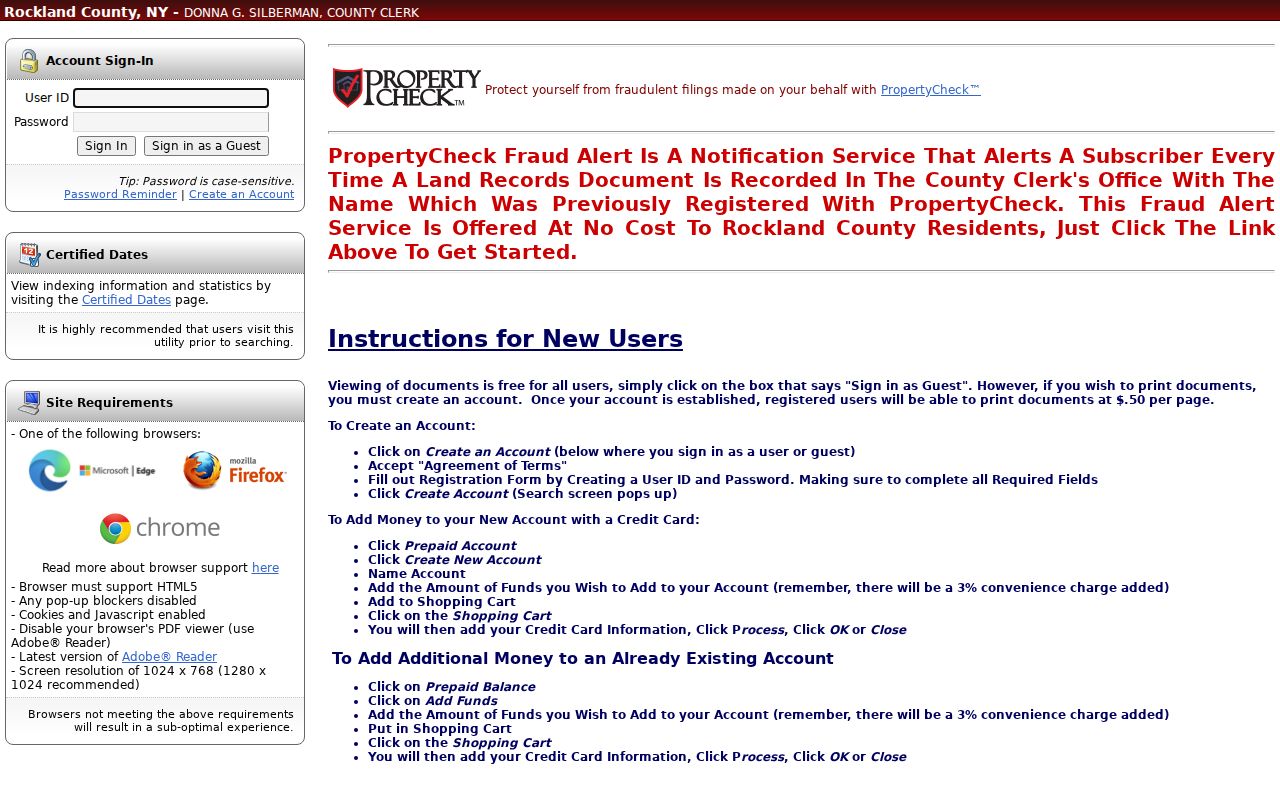
Record the document details before moving back one party. Cross-document links are not guaranteed, so the chain requires a manual legal-description check at every transfer.
Haverstraw Archive Deed Eras
County Archives identifies original Rockland deeds from 1798 through 1907 and original mortgages from 1798 through 1931. Those dates are the solid archive anchors for a previous-resident search. Mortgages, assignments, and satisfactions can explain a financial or ownership transition, but they do not by themselves identify a household at the address.
Cott says many documents are digitized and its index reaches back to early county records, but the research did not locate a current text table of Certified Dates. Do not state an online cutoff. Use the portal's Certified Dates feature first, then shift to the Clerk search room, County Archives Building S, county maps, and catalog holdings for a pre-digital gap. Ask for the SBL and deed-book range, since the Clerk does not verify the SBL references displayed in its system.
Search tip. Guest viewing in Cott is free, and printed images require a registered account at $0.50 per page. Certified Dates is the first checkpoint before an archive visit or copy request.
Haverstraw Previous Residents Directories
A deed chain identifies recorded parties. A reverse directory offers a different kind of evidence: a dated published contact or occupant clue attached to an address. Rockland cross-reference directories, verified for 1978 through 1999, are the strongest local address-first shelf. Search the exact number and the street-name variants, then move to the name portion of the same volume and a neighboring year to compare initials, spouse or household note, and any listed activity.
For earlier periods, Haverstraw telephone books cover 1884 through 1890, county telephone books cover 1910 through 1998, and digitized railroad directories cover 1889-90, 1890-91, 1904, and 1917-18. The 1890-91 Thompson and Breed directory is organized around villages and West Shore Railroad stations. A household can therefore appear under a village or station rather than a familiar modern street label.
The Rockland County digitized directory collection lists the local railroad and Haverstraw volumes available as searchable or downloadable PDFs.
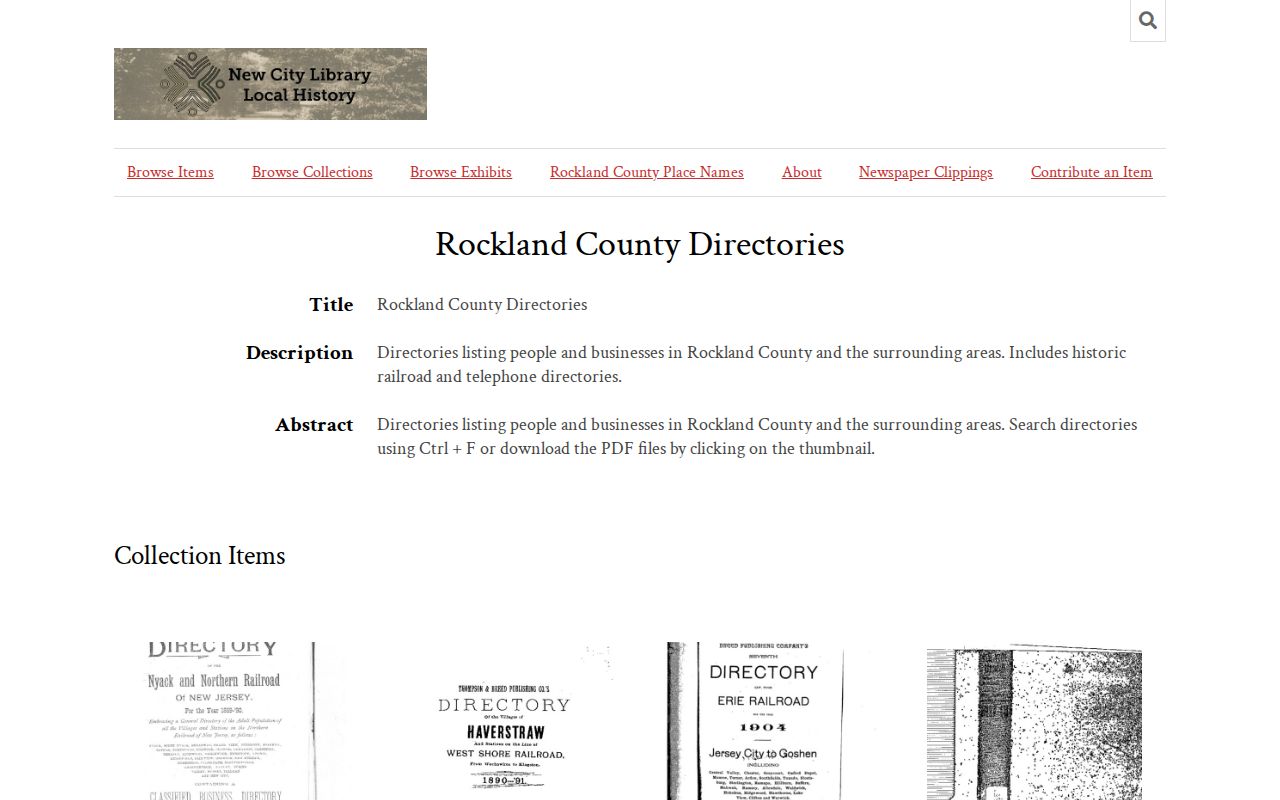
Preserve each printed spelling, village, station, and date. An absent entry means the source did not locate one, not that a person had died or left the area.
Haverstraw Census and Directory Pairing
Pair a directory year with the closest local census image to move from an address lead to a household record. Haverstraw Library's local set includes 1850, 1855, 1865, 1870, 1892, 1900, and 1905 images. Census schedules can provide household composition, names, ages, relationships, nativity, or other details depending on the year. A directory is a publication snapshot, so the two sources can reasonably show different circumstances.
- Use the cross-reference directory for an address in a known 1978-99 year, or an earlier telephone or railroad volume where applicable.
- Search the name section in that same year and retain initials, surname variants, and the printed village or station.
- Pair the result with the nearest 1892, 1900, or 1905 local census image when the period permits.
- Check a neighboring directory year before treating an appearance or absence as a move.
- Close the dated household trail with an obituary, cemetery record, probate file, or later directory entry when supported.
The federal 1890 schedules were largely destroyed. For that gap, use the 1892 Rockland state census and the local library image set rather than presuming there is a complete 1890 household list.
Haverstraw 1910 Sanborn Clue
The 1910 Haverstraw Sanborn set has 17 sheets and is a structure-date anchor, not a resident list. It can show whether a building existed, its footprint, material, use, street setting, and adjacent businesses. Compare the map with a 1905 census image, a directory or newspaper near 1910, and later permit files rather than assigning a person to a building from the map alone.
The 1906 clay-excavation landslide destroyed the Rockland Street business section and killed 19 people. A pre-1906 address can therefore have a break between early deeds or directories and later rebuilding material. Search post-disaster deeds, notices, obituaries, permits, lawsuits, insurance material, and newspapers before treating a missing address or name as an unexplained departure.
A common mistake. A continuous deed chain is not a household list. It records property interests at dates, while directories and census materials are the better sources for a dated appearance at an address.
Haverstraw Historic Name Boundaries
Historical labels need to travel with the address. The original Village of Haverstraw was incorporated as Warren in 1854 and renamed Haverstraw in 1874. Search Warren and Haverstraw in 19th-century deeds, directories, and newspapers. Preserve Haverstroo as an additional older spelling when it appears in a historical source rather than silently converting it.
Town, Village, postal place, and railroad labels can differ. The Town includes Haverstraw and West Haverstraw villages, Garnerville, Thiells, and part of Pomona. A record may use one of those labels or a West Shore station. Search the modern and historic street spellings, keep suffix forms such as St, Ave, and Rd, and rely on the SBL or legal description when naming systems collide.
Note: No verified official street-renumbering date was located, so check for renaming or renumbering without assigning an unsupported year.
Haverstraw Previous Residents Library Support
Haverstraw Library's Thomas F.X. Casey Local History Room is a practical handoff when the digital chain stops. The non-circulating room covers the Town and the Villages of Haverstraw, West Haverstraw, and Garnerville, with photographs, newspapers, yearbooks, census images, genealogy links, and local books. Provide the street address, approximate construction era, prior owner names, and SBL when requesting help. The library's listed telephone number is 845-786-3800.
Rockland Room at New City Library supplies the cross-reference and county telephone shelf. The Historical Society of Rockland County and the Genealogical Society of Rockland County are further support for county records, maps, church or cemetery materials, and historical organizations. Ask whether a collection is indexed, whether a staff search fee applies, and whether an image may be copied. No public item-level house or surname index was located for every collection.
The Haverstraw Library local-history page shows the request route and the source types available for a house-history question.
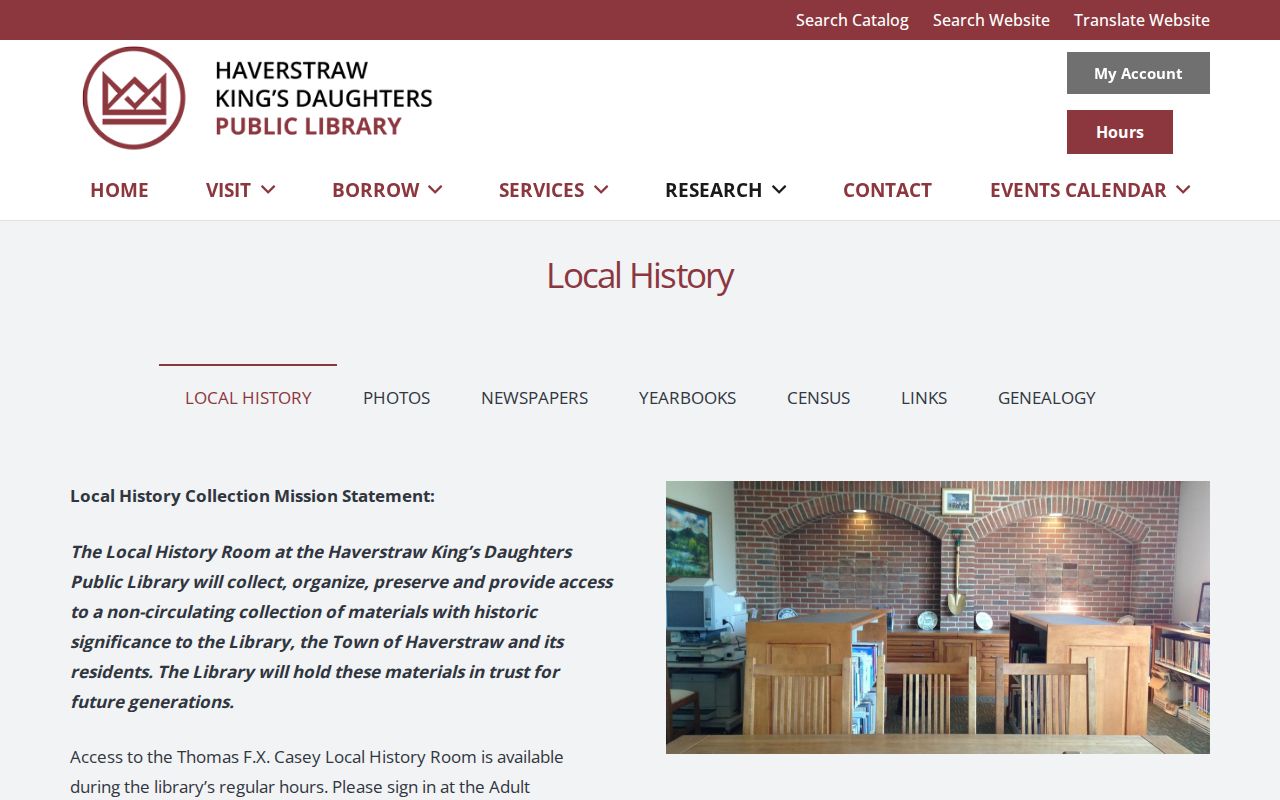
Giving staff both an address and an SBL makes it easier to reconcile a historical printed label with the modern parcel.
Haverstraw Previous Residents Endpoints
Obituaries, cemetery notices, probate files, and later deeds can close an older address trail. Search local newspapers by the name and address, then use Rockland Surrogate records for a decedent, party, or date where the record is public. Probate may identify an executor, heirs, or a later property transfer. Mailing and contact addresses in probate materials still need a source-specific label.
Building permits and certificates can date additions, demolition, change of use, or a work application. The Village form calls for owner and applicant names and addresses, tax-map description, occupancy or use, valuation, and work description. Request the existing file under FOIL. A permit-holder link is a dated involvement record, not proof that a named person lived there.
Haverstraw House History Limits
Use past-resident research for family history, local history, property history, and personal curiosity. Name the source type honestly: recorded owner, tax contact, published subscriber, census household member, applicant, or estate party. Do not merge those terms into a single claim about a living person's whereabouts.
New York Address Confidentiality Program and protected-voter rules can keep current addresses out of public routes. A public-record gap, a digitization gap, or a same-name problem is a reason to stop or seek the correct custodian, not an invitation to infer private facts. If the underlying roll or index is wrong, contact the assessor, County Clerk, Board of Elections, or other creating office with the relevant parcel or instrument number.